EN
EN
 fr
fr  de
de  es
es  th
th  ru
ru  tr
tr  pt
pt  ar
ar  ms
ms  id
id 
In the stable operation of power systems, transformers serve as core equipment for energy transmission and conversion. Their operating efficiency directly determines the level of energy utilization and significantly impacts electricity costs and operational profitability for enterprises. With the continuous expansion of industrial power consumption and increasingly stringent national energy-saving policies, reducing electrical losses through scientific efficiency calculations, proper equipment selection, and optimized operational management has become a critical approach for achieving energy conservation, efficiency improvement, and sustainable development.
This article systematically analyzes the core concepts, calculation methods, and loss components of transformer efficiency. It also examines key influencing factors through practical case studies and proposes actionable strategies for efficiency improvement, helping enterprises optimize power system performance and maximize economic benefits. For those seeking high-efficiency transformer solutions, the insights provided here can support targeted selection.
Transformer efficiency is a key indicator of its energy conversion capability. It is defined as the ratio of output power to input power, typically expressed as a percentage:
η = P₂ / P₁ × 100%
= P₂ / (P₂ + P₀ + Pₖ) × 100%
Where:
η = efficiency
P₂ = output power
P₁ = input power
P₀ = core loss (no-load loss)
Pₖ = copper loss (load loss)
Ideally, all input electrical energy would be delivered to the load. However, due to material properties and structural limitations, various losses occur during operation, dissipating energy as heat. Therefore, output power is always lower than input power. Higher efficiency indicates lower energy loss and better utilization.
Case Study
A manufacturing enterprise operates a 1000 kVA transformer with an input power of 1000 kW and output power of 970 kW, resulting in an efficiency of 97%. If the transformer runs continuously for 8,000 hours annually, the energy loss reaches 240,000 kWh, leading to substantial electricity costs—highlighting the importance of improving efficiency.
Transformer losses are the primary factor affecting efficiency and consist of:
Total Loss = Core Loss + Copper Loss
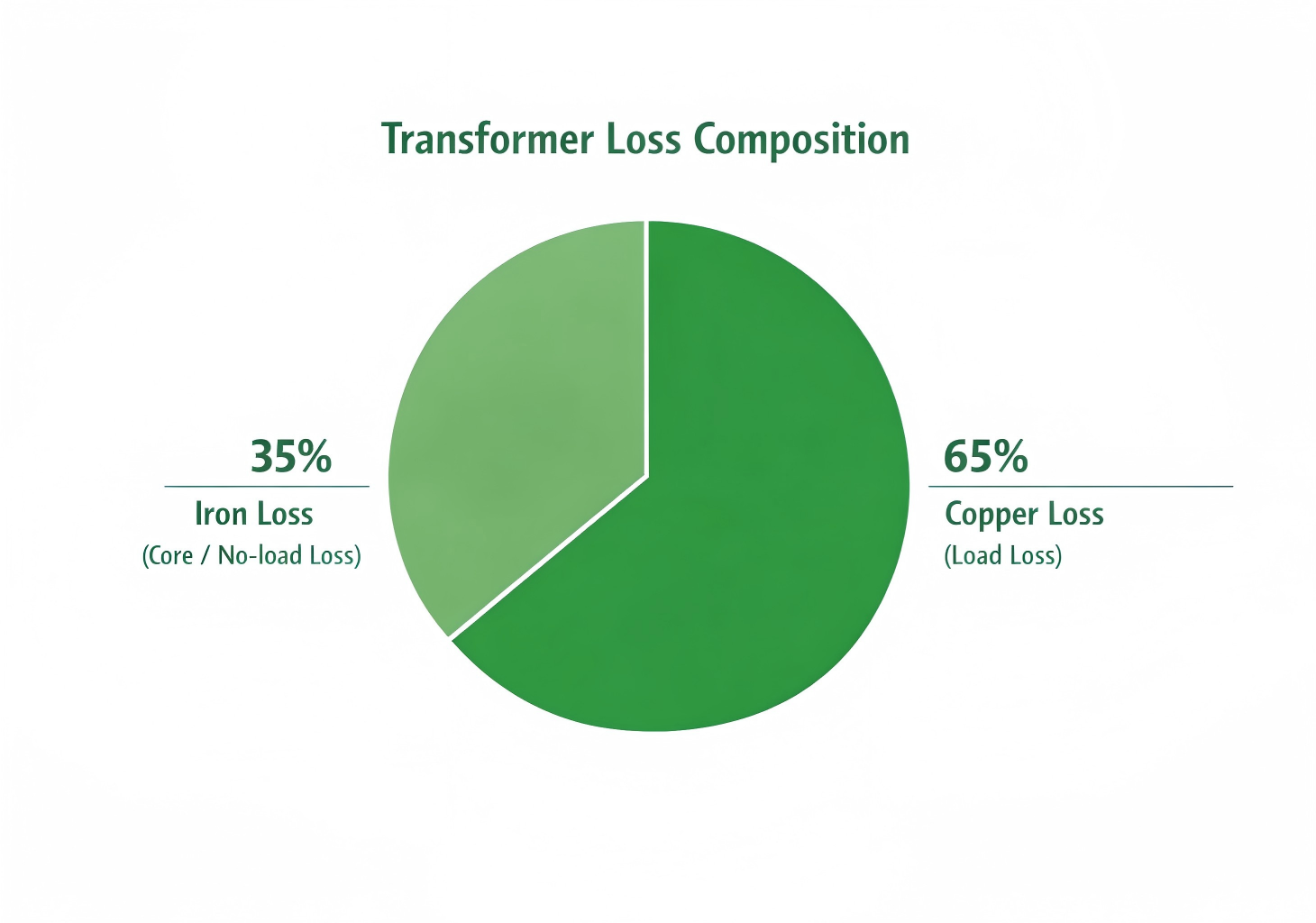
Core loss occurs whenever the transformer is energized, even without load. It remains relatively constant and depends on voltage and frequency.
Components:
Hysteresis loss: Caused by repeated magnetization of the core material
Eddy current loss: Induced currents within the core that generate heat
Influencing Factors:
Core material: High-permeability silicon steel (e.g., low-loss silicon steel) can reduce losses by ~20%
Voltage and frequency: Higher voltage or frequency increases core loss
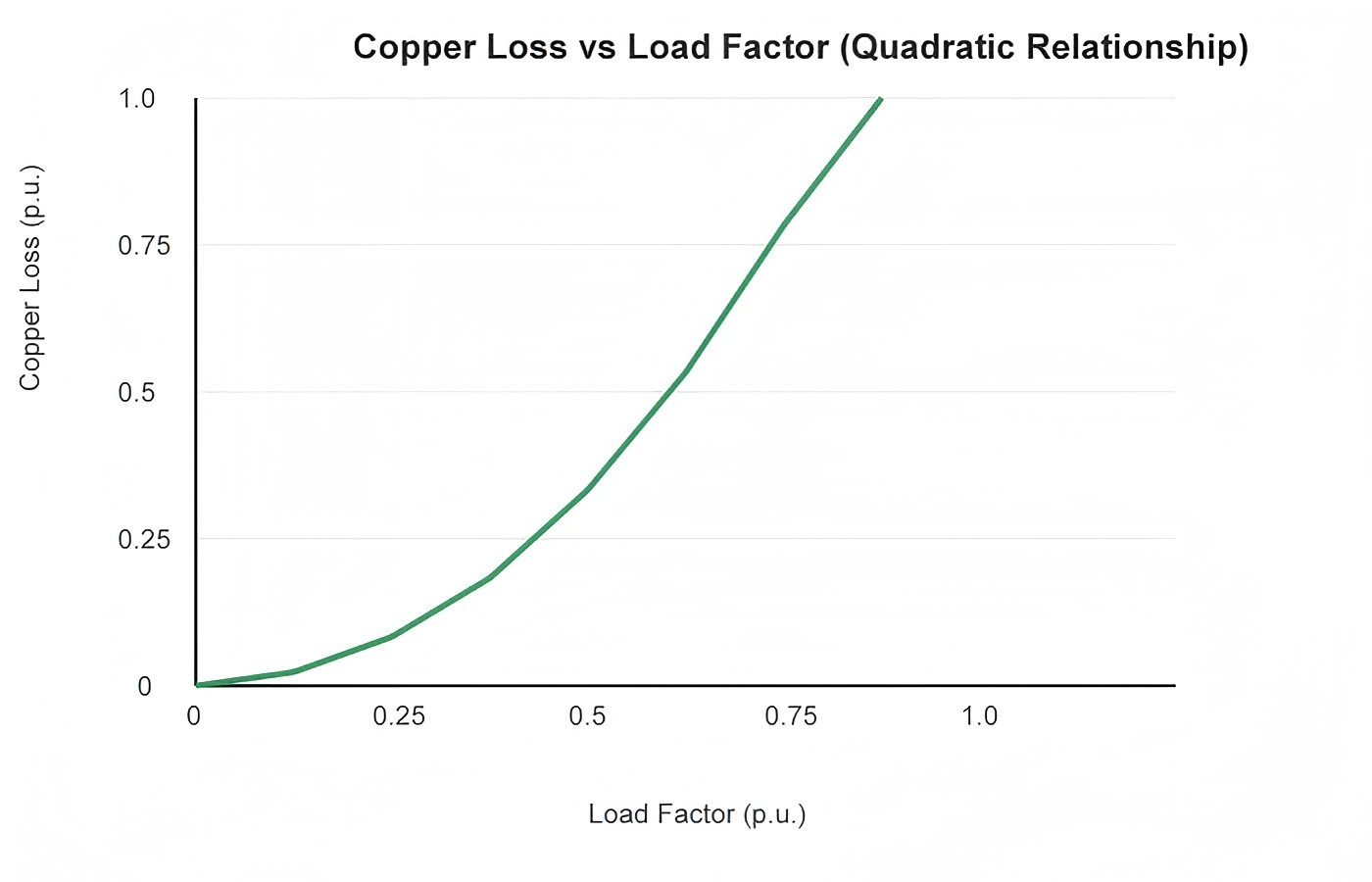
Copper loss is caused by the resistance of transformer windings and increases with the square of the load current.
Formula:
Copper Loss = Full-load Copper Loss × (Load Factor)²
Influencing Factors:
Load rate: Higher load leads to significantly increased losses
The choice of transformer winding material and winding design directly affects resistance and copper loss. High-conductivity materials (e.g., oxygen-free copper) and optimized winding structures help reduce resistance.
Core Formula:
η = P₂ / (P₂ + P₀ + Pₖ) × 100%
η = (β × Sₙ × cosφ) / (β × Sₙ × cosφ + P₀ + Pₖ) × 100%
Where:
β = load factor
Sₙ = rated capacity
cosφ = power factor
A 2000 kVA transformer operates under:
Load factor: 70%
Power factor: 0.9
Core loss: 3 kW
Full-load copper loss: 20 kW
Steps:
Copper loss: 20 × (0.7²) = 9.8 kW
Total loss: 3 + 9.8 = 12.8 kW
Output power: 2000 × 0.7 × 0.9 = 1260 kW
Efficiency: 1260 / (1260 + 12.8) ≈ 98.99%
Optimal efficiency typically occurs between 60%–80% load:
Low load: Core loss dominates, reducing efficiency
High load: Copper loss rises sharply
High-quality silicon steel reduces core loss
Optimized winding reduces copper loss
Precision manufacturing minimizes stray losses
High temperature increases resistance → higher copper loss
Poor cooling reduces efficiency
Dust and humidity increase additional losses
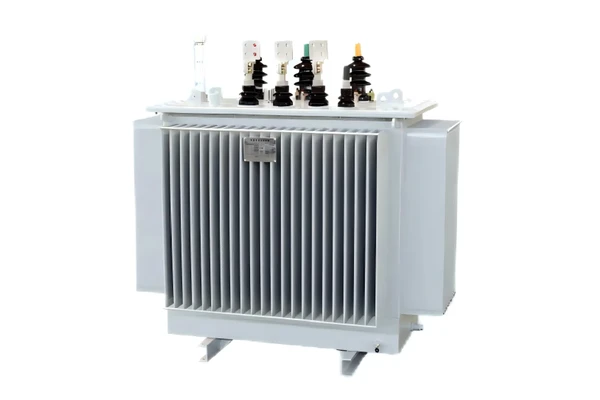
Huawan manufactures durable 35kv transformer designed for harsh environments, ensuring long-term high efficiency.
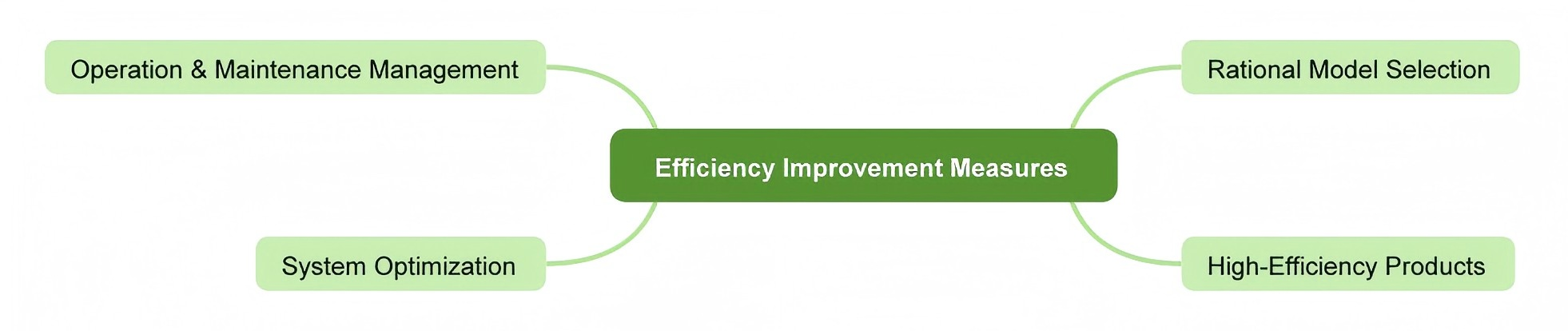
Effective power transformer selection should match transformer capacity with actual load demand to maintain the optimal load range.
Select transformers with higher efficiency ratings to reduce baseline losses.
Regular inspection and maintenance reduce abnormal losses and ensure stable operation.
Install reactive power compensation
Improve power factor
Optimize grid layout
Even a 1% efficiency improvement can yield significant annual savings.
Lower energy consumption and carbon emissions support regulatory compliance and sustainability goals.
Lower losses reduce temperature rise, extend lifespan, and decrease failure rates.
Transformer efficiency depends not only on design but also on manufacturing quality and service capability. Choosing experienced transformer manufacturers can help ensure reliable design, material selection, production quality, and long-term operational performance.
Low-loss materials
Optimized electromagnetic design
Strict quality control processes
Customized solutions
Selection guidance
Energy efficiency analysis
Operational consulting
Transformer efficiency is not merely a technical metric—it directly impacts energy cost control, system stability, and sustainable development. Through scientific calculation, proper selection, and optimized operation, enterprises can significantly improve system efficiency and reduce energy waste.
High-efficiency transformers represent a critical strategy for cost reduction and performance improvement, as well as a key driver for green transformation in the power industry.
Q: Is higher transformer efficiency always better?
A: Higher efficiency improves energy savings, but cost and ROI should also be considered.
Q: Why can’t transformer efficiency reach 100%?
A: Core and copper losses are unavoidable due to physical and material limitations.
Q: How to identify energy-efficient transformers?
A: Check no-load loss, load loss, and certified efficiency ratings.
Q: Should old transformers be replaced?
A: Transformers over 10 years old typically have higher losses; replacing them can significantly reduce energy costs.
Q: What are the risks of low load operation?
A: Low load increases the proportion of core loss, reduces efficiency, and wastes energy.
Empowering the Grid, Serving Customers, Advancing Society

Empowering the Grid, Serving Customers, Advancing Society