EN
EN
 fr
fr  de
de  es
es  th
th  ru
ru  tr
tr  pt
pt  ar
ar  ms
ms  id
id 
In the fields of power systems and industrial power distribution, transformers serve as the core equipment for voltage conversion and power transmission. Their selection directly impacts system safety, operating costs, and long-term reliability. Many purchasers and engineers face a critical decision in practical projects: should they choose an oil-immersed transformer or a dry-type transformer?
1. Oil-Immersed Transformer
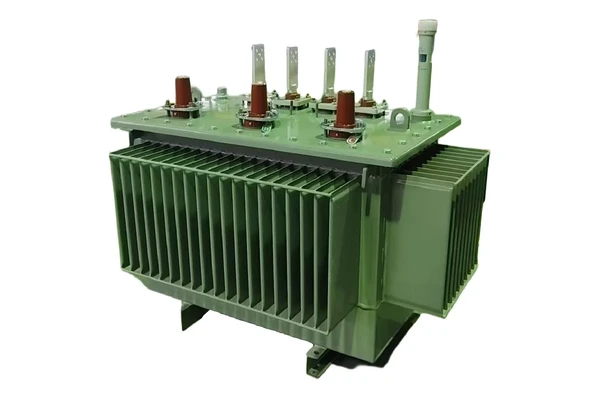
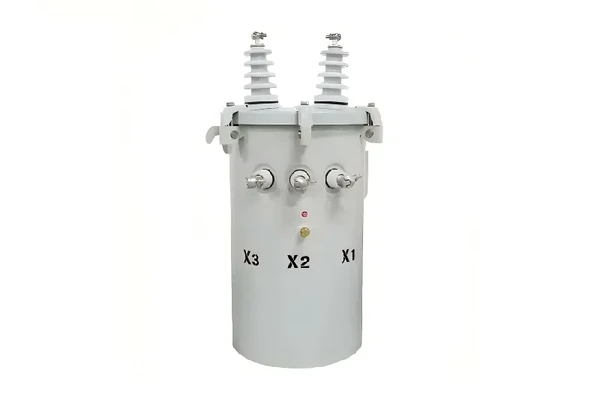
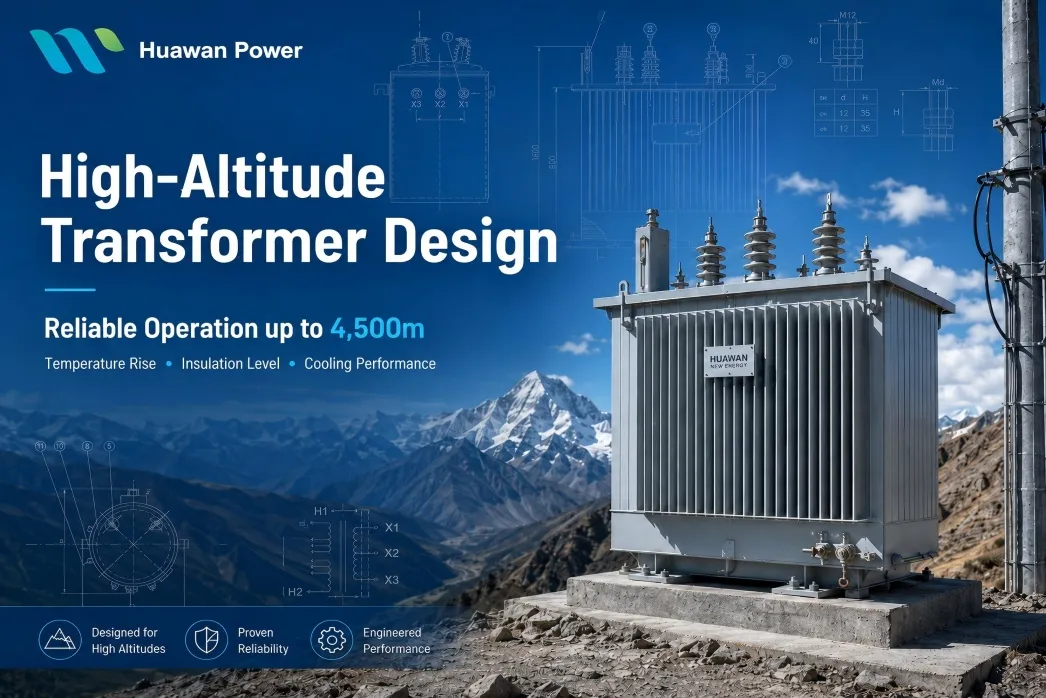
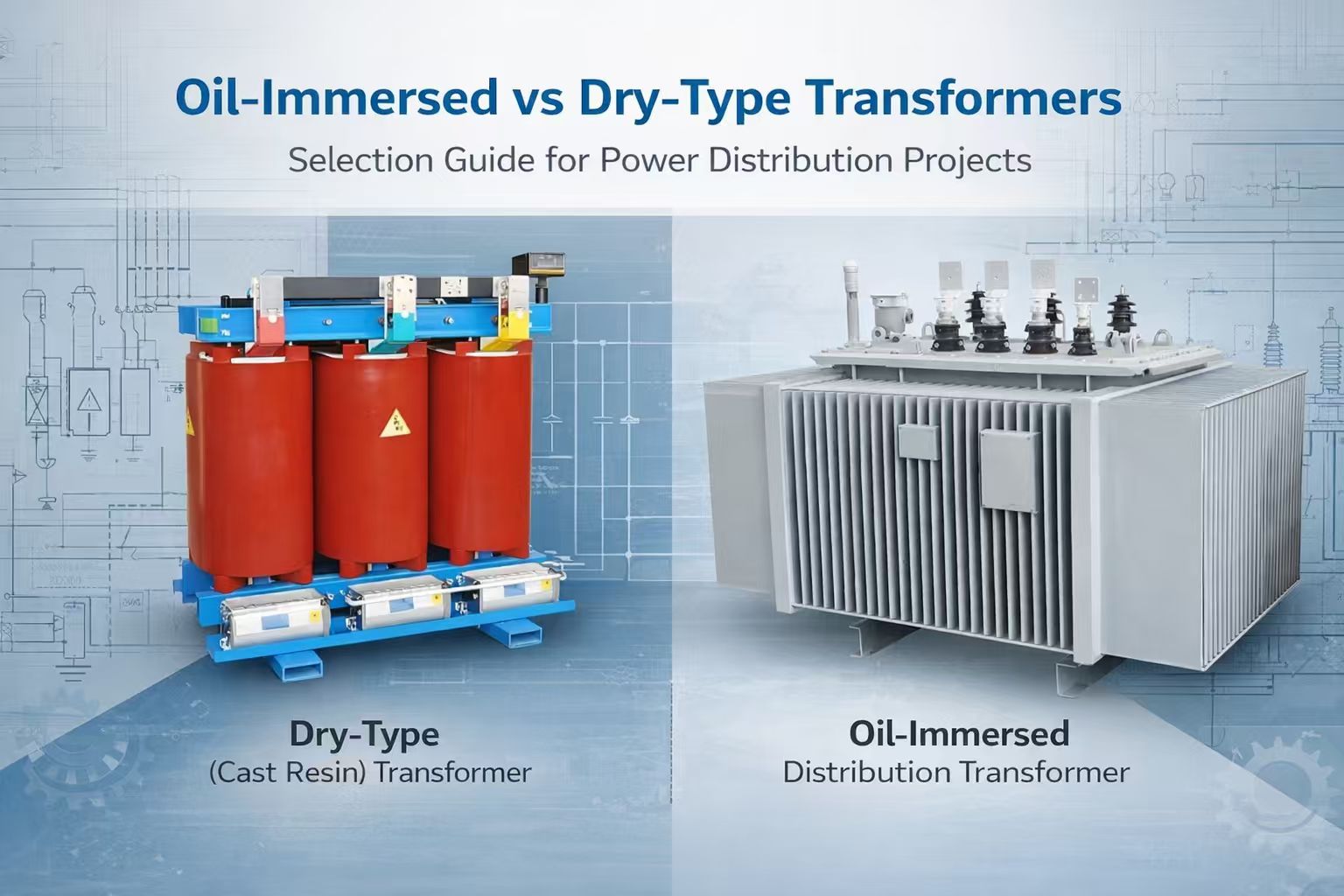
Oil-immersed transformers use insulating oil (such as mineral oil or synthetic ester) as the core insulation and heat dissipation medium. The windings and iron core are fully immersed in a sealed oil tank, with heat dissipation achieved through natural oil circulation or forced oil circulation. Typically rated at Insulation Class A, they rely primarily on the cooling and insulating properties of the oil. Thanks to the sealed oil tank, they offer excellent moisture resistance and can adapt to high-humidity or high-altitude areas. Designed around the core concepts of "efficient heat dissipation and large capacity bearing," they are widely used in high-voltage and high-power scenarios.
2. Dry-Type Transformer
Dry-type transformers mainly adopt solid insulating materials (such as epoxy resin) or air/vacuum casting processes, requiring no insulating oil at all. Their heat dissipation is primarily through natural air cooling or forced air cooling. With higher insulation ratings (usually Class F or H), dry-type transformers can withstand more significant temperature rises. Additionally, high-quality epoxy casting processes ensure extremely low partial discharge levels, guaranteeing long-term operational insulation reliability. While they possess moisture resistance, special protection classes (e.g., IP3X) or moisture-proof treatments are required for high-humidity environments (such as coastal areas), and their temperature rise characteristics are affected by altitude. The oil-free design, a core feature, fundamentally eliminates safety hazards such as oil leakage and fires, making them more suitable for application scenarios with strict safety and environmental requirements.
In practical projects, 1000 kVA, 10kV, or 11kV is one of the most common capacity and voltage levels in industrial and commercial power distribution.
Items | Oil-Immersed Transformer | Dry-Type Transformer |
Rated Capacity | 1000 KVA | 1000 KVA |
Voltage Level | 10KV/0.4KV or 11kV/0.4KV | 10kV/0.4KV or 11kV/0.4kV |
Cooling Method | ONAN | AN/AF |
Operating Efficiency | Higher (superior under high-heat conditions) | Slightly lower |
Allowable Overload Capacity | Strong; excellent short-term overload performance | Moderate; strict temperature rise control required |
Fire Protection Performance | Requires fire protection and oil containment facilities | Naturally flame-retardant; high fire protection rating |
Installation Environment | Outdoor, independent substations | Indoor, basements, building interiors |
Space Requirement & Structure | Larger volume | Compact structure |
Initial Purchase Cost | Lower (initial purchase cost) | Higher (initial purchase cost) |
Operation and Maintenance | Requires regular oil inspection and seal checks | Basically maintenance-free |
Typical Applications | Industrial parks, PV booster stations | Commercial buildings, hospitals, data centers |
Under the same capacity and voltage conditions, oil-immersed and dry-type transformers exhibit significant differences in performance, cost, and application focus.
In Huawan New Energy's practical projects, for the same capacity level, we can provide both oil-immersed and dry-type solutions, with targeted optimized designs based on project environment, load characteristics, and operational maintenance conditions.
1. Applicable Scenarios for Oil-Immersed Transformers
• Outdoor substations, pad-mounted transformer systems, and power grid side transmission and distribution projects;
• Industrial parks, large manufacturing plants, and metallurgical heavy industry (requiring resistance to impact loads or frequent overloads);
• New energy projects (photovoltaic and wind power booster stations), featuring strong weather resistance and obvious cost advantages for large capacities;
• Rural power grid renovation and industrial projects sensitive to initial costs with permissible installation environments.
2. Applicable Scenarios for Dry-Type Transformers
• Urban commercial complexes, office buildings, and super high-rise buildings (installed in basements or electrical shafts);
• Crowded places with extremely high power supply safety requirements, such as hospitals, schools, and data centers;
• Public transportation hubs such as subways, airports, and high-speed rail stations (located near crowded areas with high fire safety standards);
• Hazardous environments with explosion-proof requirements (e.g., chemical and mining industries) or environmentally sensitive areas such as water source protection zones and ecologically sensitive areas;
• Space-constrained scenarios such as indoor power distribution rooms, mid-floor installations, and basements with limited ventilation;
• Power distribution renovation of old residential areas.
3. Selection Thinking for the Capacity Overlap Range (1000kVA-2500kVA)
For capacities within this range, a comprehensive evaluation is required: if installed in an outdoor independent substation with a professional maintenance team and a focus on long-term cost-effectiveness, oil-immersed transformers are preferred; if installed indoors with strict fire and environmental protection requirements or inconvenient maintenance, dry-type transformers are more suitable.
1. Initial Investment Cost
• Oil-immersed transformers: Lower unit capacity cost, especially for large-capacity scenarios, with significant advantages in initial purchase price. Suitable for projects with limited budgets, but fire prevention and oil containment facilities may need to be considered.
• Dry-type transformers: Complex manufacturing processes result in higher initial investment, but no additional oil protection or fire-fighting facilities are required.
2. Long-Term Operation and Maintenance Costs
• Oil-immersed transformers: High maintenance costs, requiring regular oil quality testing, seal inspections, oil filtration, or replacement. Cumulative long-term operation and maintenance expenses are relatively high.
• Dry-type transformers: Basically maintenance-free, only requiring simple dust removal and insulation inspections, offering more advantages in long-term operating costs.
3. Summary
Oil-immersed transformers have lower initial costs but higher operation and maintenance costs; dry-type transformers have higher initial costs but lower operation and maintenance costs.
Q: Is the dry-type transformer really completely maintenance-free?
A: Not entirely, but maintenance is simple. It mainly involves inspecting fasteners, removing dust, and conducting insulation resistance tests, with no need to handle insulating oil.
Q: Which is safer, the oil-immersed transformer or the dry-type transformer?
A: Objectively speaking, oil-immersed transformers carry risks of oil leakage and fire compared to dry-type transformers. However, safety inspections are indispensable for both types.
Q: Which transformer should be prioritized when the budget is limited?
A: For outdoor environments, oil-immersed transformers can be prioritized; for indoor environments, even with a limited budget, dry-type transformers are recommended to avoid additional costs from later safety rectifications.
Q: Is choosing an exactly suitable transformer capacity the most cost-effective?
A: An exactly matching capacity may lead to higher costs for replacement in the future. Considering load growth, the capacity should be selected with a 15%-20% margin.
Q: What is the difference in service life between oil-immersed and dry-type transformers?
A: Under the same operating conditions, dry-type transformers have a service life 3-5 years longer than oil-immersed transformers.
1. Is the transformer to be installed indoors or outdoors? Are there space constraints or humid environments?
2. Does the project location have strict fire protection, explosion-proof, or environmental regulations?
3. What are the designed capacity and voltage level? Is it necessary to bear impact loads or frequent overloads?
4. Is the project equipped with a professional maintenance team? Is unattended operation required?
5. Does the project prioritize initial investment cost or long-term safety and operational economy?
Oil-immersed and dry-type transformers each have technical advantages, with no absolute superiority or inferiority. Oil-immersed transformers stand out with core competitiveness in "large capacity, low cost, and strong overload capacity," adapting to large outdoor projects; dry-type transformers lead in indoor and sensitive environment applications with core highlights of "high safety, low maintenance, and environmental friendliness."
The correct selection logic should be: based on the project installation environment, taking safety and environmental requirements as the bottom line, centering on capacity and voltage needs, and considering the life-cycle cost. For large-scale, special, or complex projects, it is recommended to invite power supply and distribution experts and transformer manufacturers for special demonstrations during the design phase to obtain customized selection plans, laying a solid foundation for the safe and stable operation of the power system.
Learn More:
• Oil-Immersed Distribution Transformer
• Dry-Type Cast Resin Transformer
Empowering the Grid, Serving Customers, Advancing Society

Empowering the Grid, Serving Customers, Advancing Society