EN
EN
 fr
fr  de
de  es
es  th
th  ru
ru  tr
tr  pt
pt  ar
ar  ms
ms  id
id 
In today's era of rapid development of renewable energy, photovoltaic (PV) power plants have become a crucial pillar of green electricity. As a key component in PV systems, step-up transformers are responsible for converting the low-voltage direct current (DC) generated by PV arrays into high-voltage alternating current (AC), facilitating grid connection, transmission, and long-distance power delivery. Selecting the right step-up transformer not only improves the overall efficiency of the power plant but also reduces operation and maintenance costs while ensuring stable system operation.
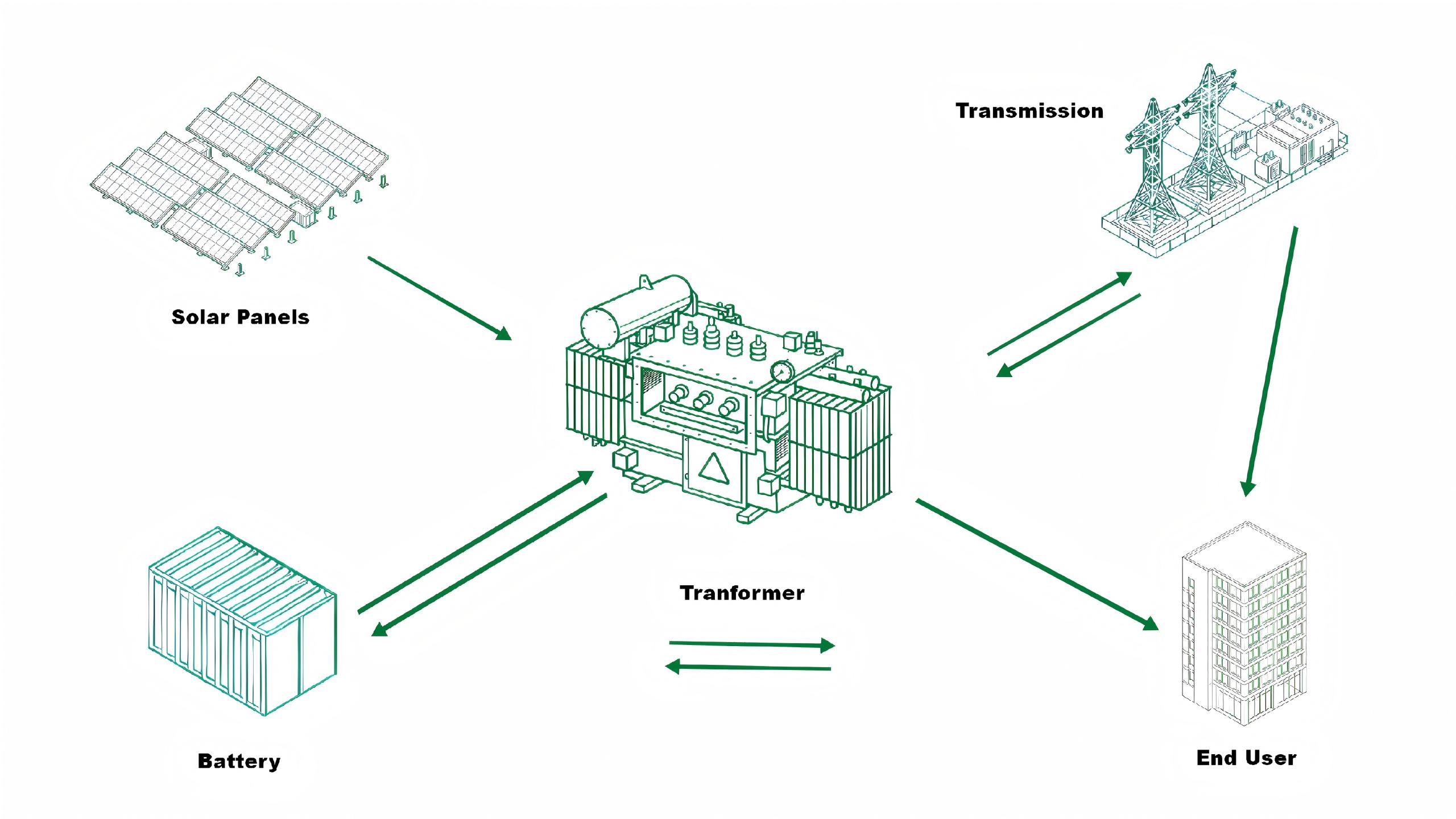
Unlike traditional distribution transformers, the main function of a PV step-up transformer is to step up the low-voltage alternating current (AC) output by the inverter to the high-voltage level required by the power grid (e.g., 10kV, 35kV) for grid-connected output. Traditional distribution transformers primarily focus on stepping down high voltage, whereas PV step-up transformers operate in the reverse direction—their low-voltage side bears the inverter's output voltage (commonly 0.4kV, 0.69kV, or 0.8kV), and the high-voltage side steps it up to the grid-connected voltage. According to data from the International Energy Agency (IEA), the global PV installed capacity exceeded 1TW in 2023 and is projected to double by 2030, directly driving the demand for high-efficiency step-up transformers.
In practical applications, step-up transformers must feature high efficiency, low noise, and strong weather resistance to adapt to outdoor environments. High-quality step-up transformers can maintain an energy conversion efficiency of over 98%, significantly boosting the power plant's return on investment (ROI).
In PV power generation systems, step-up solar PV transformer perform the following key roles:
1. Voltage matching and step-up: Step up the low-voltage AC output by the inverter to the grid-connected voltage, enabling energy transmission between the power plant and the grid.
2. Electrical isolation: Prevent DC components and leakage current from entering the grid, enhancing system safety.
3. System stability: Minimize the impact of harmonics and voltage fluctuations on the grid through optimized design.
4. Environmental adaptability: Withstand outdoor conditions such as high temperature, high humidity, sandstorms, and salt spray for outdoor installations.
Therefore, during the selection process, multiple factors must be considered, including capacity matching, environmental adaptability, energy efficiency standards, and economy.
In both centralized and distributed PV power plants, the 1500kVA transformer is one of the most widely used capacity ratings, especially suitable for the standardized design scheme of "string inverter + step-up unit." This capacity achieves a good balance between system efficiency, investment costs, and operational convenience.
Common solar power plant transformer application scenarios:
1. Centralized ground-mounted PV power plants: Serve as an independent step-up unit for an inverter sub-array.
2. Mountainous, desert, and fishery-solar complementary power plants: Meet the engineering requirements of decentralized layout and on-site step-up.
3. Industrial and commercial distributed PV projects: Flexibly match with multiple 100kW–250kW string inverters.
Practical engineering configuration example (taking a 50MW ground-mounted centralized PV power plant as an example):
1. Capacity of a single PV sub-array: Approximately 1.5MW.
2. Configuration per sub-array:
(1) Multiple string inverters.
(2) 1 unit of 1500kVA step-up transformer.
(3) After step-up, connect to the 35kV collection line and integrate into the step-up substation for grid connection.
3. Advantages of this scheme:
(1) High standardization: Facilitates bulk procurement and rapid construction.
(2) Strong operational independence: Failure of a single device does not affect the overall operation of the power plant.
(3) Controllable comprehensive costs: Achieves a balance between capacity utilization and the number of devices.
Q: What is the core function of a step-up transformer for PV power plants? What is the difference from traditional distribution transformers?
A: Its core function is to step up the low-voltage AC from the inverter to high voltage for grid connection, while also providing electrical isolation, stabilizing the grid, and withstanding outdoor conditions. The difference lies in that traditional transformers mainly focus on stepping down voltage, whereas transformer in solar power plant steps up low voltage and need to adapt to outdoor environments.
Q: What are the key roles of PV step-up transformers?
A: 1. Voltage matching and step-up;
2. Electrical isolation to prevent risks;
3. Stabilize the grid and reduce fluctuations;
4. Adapt to complex outdoor environments.
Q: What are the energy efficiency requirements for PV step-up transformers? Why is high efficiency important?
A: High-quality transformers require an energy efficiency of ≥98%. High efficiency is important because it improves return on investment, reduces energy consumption, extends equipment lifespan, and lowers operation and maintenance costs.
Q: What factors should be prioritized when selecting a PV step-up transformer?
A: 1. Capacity matching + 10-20% redundancy;
2. Performance indicators such as efficiency and short-circuit impedance;
3. Outdoor environmental adaptability;
4. Supplier after-sales service and fault response capabilities.
Q: How can Huawan assist you?
A: Based on project experience in Australia and other regions, Huawan can provide the most suitable products and services for your project.
With the acceleration of global energy transition, the installed scale of PV power plants continues to expand. As an important part of the PV industry chain, the market size and technical attention of step-up transformers will keep growing. Enterprises should prioritize performance indicators, environmental adaptability, and long-term operational capabilities when selecting such equipment to ensure the long-term efficient operation of the power plant and maximize investment returns.
Empowering the Grid, Serving Customers, Advancing Society

Empowering the Grid, Serving Customers, Advancing Society