EN
EN
 fr
fr  de
de  es
es  th
th  ru
ru  tr
tr  pt
pt  ar
ar  ms
ms  id
id 
In the total operating costs of factories, industrial parks, and infrastructure projects, electricity costs are usually the third-largest expenditure, second only to raw materials and human resources. While we are fully committed to optimizing production lines and intensifying energy conservation in management, have we overlooked a hidden cost source that continuously erodes profits—distribution transformers? They are not only the core of power supply but also a potential blind spot in cost control. Optimizing their energy efficiency means seizing tangible profits.
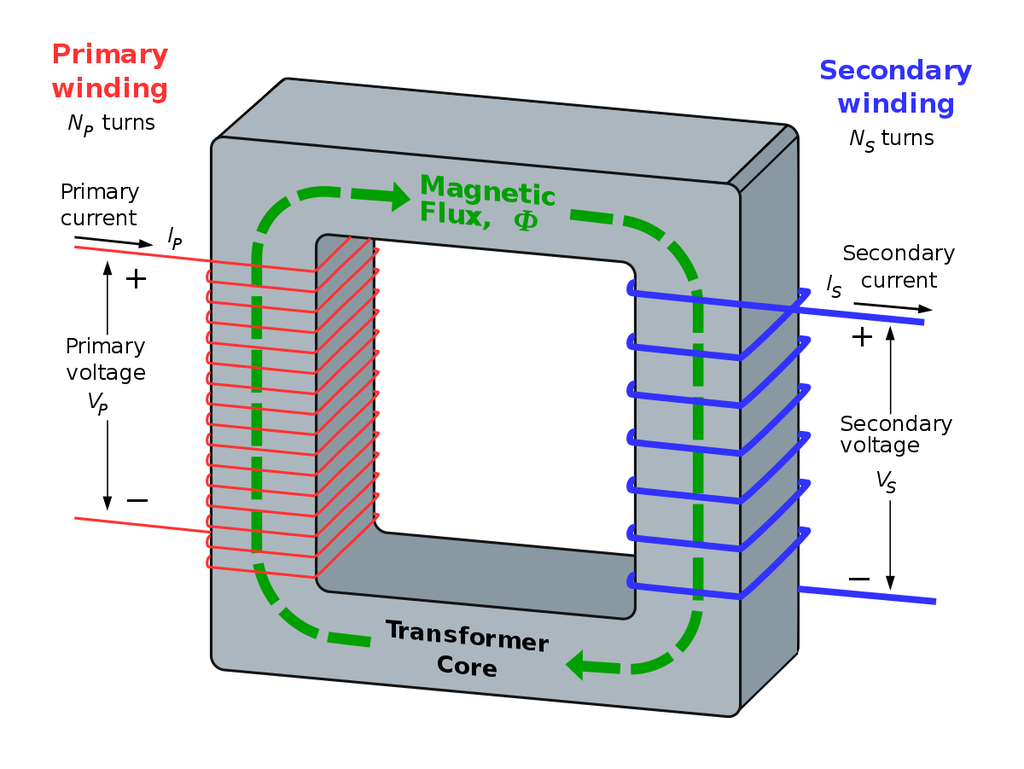
Transformer losses are far more than simple "standby power consumption"; they represent a systematic energy efficiency issue that directly affects an enterprise’s financial performance.
1. No-Load Loss (Iron Loss)
No-load loss refers to the fixed energy consumption that occurs when a transformer is connected to a power source—even if its secondary side carries no load—to maintain the internal magnetic field (excitation). This loss mainly consists of hysteresis loss and eddy current loss:
Hysteresis loss: Arises from energy dissipation caused by friction between magnetic domains inside the iron core when it is repeatedly magnetized and demagnetized in an alternating magnetic field.
Eddy current loss: Occurs when an alternating magnetic field induces circular currents (eddy currents) within the iron core, leading to thermal energy loss.
A key characteristic of no-load loss is that it is an inherent, constant loss. It persists as long as the transformer is connected to the power grid, and its magnitude is determined by the core material and manufacturing process once the transformer is designed and produced. For an old or inefficient transformer, the electricity costs resulting from no-load loss are pure, long-term fixed operating expenses—similar to an enterprise’s "basal metabolic" costs—and should be the top priority in energy-saving renovations.
2. Load Loss (Copper Loss)
Load loss is a variable loss that occurs when a transformer operates under load: current flows through the high- and low-voltage windings, generating heat due to the inherent resistance of the conductors. It also includes stray losses caused by leakage magnetic fields in structural components.
Its core characteristic is that it is proportional to the square of the load current (P ∝ I²). This means if the load current doubles, the loss will quadruple. Additionally, conductor resistance increases with temperature—under the same load, higher operating temperatures of the transformer will lead to greater load loss. Therefore, load loss is a direct derivative cost of an enterprise’s production activities: the busier the production, the higher the electricity costs from this loss.
The operating efficiency of a transformer is closely related to its load factor. Operating it for a long time in a state of "oversized equipment for low load" (excessively low load factor) or near-limit high load will take its comprehensive operating efficiency far from the optimal economic operation point, resulting in significant energy waste.
3. Hidden Costs
High losses are usually accompanied by excessive heat generation, which accelerates the aging of insulation materials and increases the risk of downtime. The losses caused by downtime are far greater than the waste of energy itself. At the same time, excessive heat also increases the additional energy consumption of the cooling system and leads to more frequent maintenance needs.
Example
Take a 1000kVA oil-immersed three-phase transformer with a rated voltage of 10kV as an example (core material: silicon steel sheets):

Total loss formula: P = P₀ + Pₖ × β²
(where β is the load factor, taking an average industry value of 60%, i.e., β = 0.6)
Class 2 energy efficiency: P₂ = 745 + 8240 × 0.6² = 3711.4 W
Class 3 energy efficiency: P₃ = 830 + 10300 × 0.6² = 4538 W
For continuous annual operation (8760 hours), the annual energy savings of the Class 2 energy efficiency product compared to the Class 3 one is:
ΔWₙᵧₑₐᵣ (Annual Energy Savings) = (P₃ - P₂) × 8760 = 7241 kWh
Strategy 1:
Invest in High-Energy-Efficiency Transformers for Long-Term ROI
Proactively select high-energy-efficiency transformers that exceed the minimum mandatory standards. In the final rule document for "Energy Conservation Standards for Distribution Transformers" (RIN 1904-AE12), the U.S. Department of Energy (DOE) conducted a life-cycle cost analysis of distribution transformers, showing that the average service life of such equipment is approximately 32 years.
The study found that although high-efficiency transformers have higher purchase costs, their total life-cycle costs are lower. For most commercial and industrial typical equipment, cost recovery can be achieved in just a few years. Thus, investing in high-energy-efficiency transformers is not only a direct cost-control measure but also enhances an enterprise’s energy management capabilities, strongly supporting its goals of sustainable development and green manufacturing.
Strategy 2:
Optimize Transformer Sizing and Load Management
The key is to address the long-term mismatch between transformer capacity and actual load. Conduct professional load analysis to accurately grasp energy consumption patterns:
If the average load factor remains low for a long time, replace the transformer with a unit of more matching capacity.
For facilities with large load fluctuations, configure a multi-transformer combined power supply scheme to ensure the transformer always operates in the high-efficiency range.
Meanwhile, if conditions permit, deploy an online monitoring system to track key parameters (such as load and temperature) in real time, and coordinate with an intelligent cooling system to maintain the optimal operating environment. This data-driven approach can upgrade maintenance strategies from passive repair to predictive maintenance, thereby reducing losses while significantly improving power supply reliability and asset service life.
Q: What are the types of invisible losses in transformers? How significant is their impact?
A: There are two types:
No-load loss (iron loss, exists as soon as powered on);
Load loss (copper loss, proportional to the square of the current).
Impact: High losses increase electricity costs, accelerate aging, and raise the risk of shutdown.
Q: How to select high-efficiency transformers? Are they cost-effective?
A: Prioritize Class 2 or higher high-efficiency products. Although the initial cost is slightly higher, the investment can be recovered through saved electricity fees, making them more economical throughout the entire life cycle.
Q: Will low load or overload aggravate losses? How to solve it?
A: Yes! Low load wastes electrical energy, and overload increases losses.Solutions: Replace with transformers of matching capacity, adopt multi-transformer combined power supply, deploy intelligent monitoring + cooling systems, etc.
Q: What is the payback period for high-efficiency transformers? What are the long-term benefits?
A: The payback period is 4-10 years for industrial/commercial scenarios. Long-term benefits include reduced electricity fees, lower maintenance costs, decreased shutdown risks, and compliance with environmental policies.
Q: How can Huawan help optimize energy efficiency?
A: Provide customized products according to your needs to help you quickly achieve your energy efficiency optimization plan.
In today’s highly competitive industrial environment, strategic cost management is crucial. Optimizing the energy efficiency of distribution transformers is a long-term, reliable investment—it not only effectively improves profit margins but also enhances an enterprise’s operational resilience.
Empowering the Grid, Serving Customers, Advancing Society

Empowering the Grid, Serving Customers, Advancing Society