EN
EN
 fr
fr  de
de  es
es  th
th  ru
ru  tr
tr  pt
pt  ar
ar  ms
ms  id
id 
Global shifts in energy, environmental regulations, and safety are driving reevaluation of transformer insulation. Traditional mineral oil, cost-effective but flammable and non-biodegradable, faces sustainability challenges. Natural ester oil, from plant sources, emerges as a key global alternative with high flash point, insulation properties, and biodegradability, now adopted in projects from North America to Europe and wind farms to urban networks.
Natural ester insulating oil achieves ≥50kV power frequency breakdown voltage, superior to mineral oil's 30-40kV, ensuring more reliable insulation. Its dielectric constant (~3.2–3.4) is close to oil-immersed paper, optimizing electric field distribution, reducing local overstresses, and extending paper life. It also has self-drying capability: absorbing and locking moisture to inhibit cellulose paper thermal aging, extending insulation system life over 5 times.
Natural ester insulating oil has high viscosity as a drawback, with about 34 mm²/s at 40°C versus mineral oil's 9.2 mm²/s—roughly 3.7 times higher—impacting transformer heat dissipation. However, its higher thermal conductivity compensates for this disadvantage. In forced oil circulation cooling, its heat transfer is superior to mineral oil's, but in natural circulation mode, high viscosity and absence of forced power cause inferior performance.
Natural ester oil has a flash point over 300°C and fire point of 360°C, compared to mineral oil's typical 140-160°C fire point, making it harder to ignite under arc faults, extinguishing faster with low smoke. These properties reduce arc faults and explosion risks. Over one million such transformers have operated globally for over 25 years without fire or explosion incidents.
Natural ester oil absorbs moisture from paper via self-drying, inhibiting hydrolysis and aging harmlessly. It forms a protective film through transesterification, delaying thermal aging, but has poor oxidation stability from unsaturated triglycerides. Adding antioxidants and passivators enhances oxidation resistance and extends service life. In sealed systems, oxidation progresses very slowly with under 10% viscosity increase over 10 years, minimally affecting performance. This delays equipment aging and reduces replacement frequency.
Property | Mineral Oil | Natural Ester |
Environmental Impact | Low biodegradability | Highly biodegradable (>98%) |
Flash Point (°C) | 140–180 | >300 |
Fire Point (°C) | 160–200 | >330 |
Density (20 °C, g/cm³) | 0.85–0.89 | 0.91–0.92 |
Viscosity (40 °C, mm²/s) | 8–12 | 30–42 |
Breakdown Voltage (kV, 2.5 mm) | 30–60 | 40–75 |
Moisture Solubility (ppm, 20 °C) | ~55 | 1000–1200 |
Oxidation Stability | Prone to acid formation | Slower aging |
Effect on Cellulose | Limited protection | Extends insulation lifetime |
Cooling Performance | Good (low viscosity) | Reduced (high viscosity) |
Thermal Conductivity (W/m·K) | ~0.12 | ~0.15 |

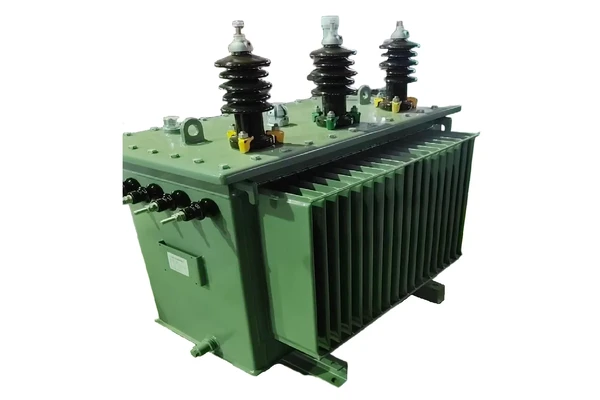
Note: The figure on the left is natural ester oil.
The procurement price of natural ester oil is typically around twice that of mineral oil. Moreover, in large power transformers, optimizing cooling efficiency may require additional radiators or improved oil channel designs, leading to an increase in equipment manufacturing costs by approximately 5%–10%.
Natural ester oil transformers require no regular maintenance like dehydration under normal conditions, unlike mineral oil transformers needing inspections and treatments, leading to significantly lower long-term costs than mineral oil systems. Practical applications show these transformers achieve maintenance-free operation normally, which is highly valuable for remote areas like wind farms.
Natural ester transformers have a higher initial investment but competitive life cycle costs, potentially making them more economical than mineral oil transformers when considering total lifecycle, operation, and maintenance expenses. In wind power, natural ester oil enables more compact, sustainable, and cost-effective transformers compared to synthetic esters or dry-type options, with maintenance-free operation reducing long-term costs, especially for remote wind farms. Additionally, its high fire point lowers fire protection requirements and costs in populated or sensitive areas, while environmental properties decrease leakage pollution risks and remediation expenses.
Natural ester insulating oil has superior biodegradability. Prepared from natural oils like soybeans and rapeseeds through pressing, refining, and compounding, it degrades over 98%. Mineral oil degrades only 30% and, if leaked, persists in soil, causing structural changes and irreversible environmental damage. Vegetable insulating oil's lifecycle carbon emissions are just 1.6% of mineral oil's. It degrades naturally in 28 days if leaked, without harm, making it green and eco-friendly.
Natural ester insulating oil comes from renewable vegetable oils like soybean, rapeseed, and palm oil, avoiding reliance on finite petroleum and easing energy security issues. It is non-toxic, environmentally compatible, and safe for water, soil, wildlife, and humans, unlike mineral oil.
1.Places with high fire protection requirements: such as urban underground substations, commercial complexes, high-rise buildings, transportation hubs, etc.
2.Environmentally sensitive areas: including drinking water sources, forest reserves, islands, etc.
3.Extreme environments: offshore wind power, high-humidity coastal areas, cold high-latitude regions, and high-altitude areas.
4.International application cases: Many European renewable energy projects, including transformer in solar power plant, distribution transformer for solar pv, and photovoltaic transformer applications, use natural ester oil transformers to improve safety and environmental performance.
5.Domestic milestone cases: China has advanced from following to leading in natural ester insulating oils with the world's first 500kV vegetable oil transformer launched at Guangzhou's Zengcheng Substation. Using 65 tons of oil, it reduces carbon emissions by 72.8 tons, equivalent to 250,000 cars traveling 1 km. This marks a key step in high-voltage green transformers and provides a "Chinese solution" for global energy transition.
In addition to conventional utility applications, natural ester insulating oil is increasingly adopted in transformer for solar power plant, solar pv transformer, pv transformer, and solar inverter transformer projects because of its excellent fire safety and environmental performance. These solutions are particularly suitable for renewable energy facilities located in remote or environmentally sensitive regions.
Comprehensive comparison shows that:
1. Natural ester oil is comprehensively superior to mineral oil in terms of insulation performance, fire resistance, heat resistance, and equipment service life.
2.The initial investment is relatively high, but the life-cycle cost is competitive.
3.It has excellent environmental friendliness and resource sustainability.
Therefore, for application scenarios with high safety requirements, strict environmental standards, and limited maintenance conditions, natural ester oil should be given priority as the insulating oil for transformers.
Q: What are the core differences between natural ester insulating oil and traditional mineral insulating oil? In which scenarios is natural ester more suitable?
A: The core differences focus on 4 key dimensions:
1.Safety Protection: The flash point/fire point of natural ester (>300℃/>330℃) is much higher than that of mineral oil (140-180℃/160-200℃), with almost no risk of combustion or explosion;
2. Environmental Performance: Natural ester has a biodegradability rate of >98% and can be naturally degraded within 28 days after leakage, while mineral oil only has a 30% biodegradability rate and pollutes the environment;
3. Insulation Life: Natural ester can lock in moisture and delay cellulose aging, and the service life of its insulation system is more than 5 times that of mineral oil;
4. Heat Dissipation Performance: Natural ester has higher viscosity (30-42mm²/s at 40℃) and slightly weaker natural circulation heat dissipation, but its thermal conductivity (0.15W/m·K) under forced cooling is better than that of mineral oil (0.12W/m·K).
Q: The viscosity of natural ester insulating oil is more than 3 times higher than that of mineral oil. Will this affect the heat dissipation efficiency and normal operation of the transformer?
A: There is no need for excessive concern. Although the viscosity of natural ester (30-42mm²/s at 40℃) is 3-4 times that of mineral oil (8-12mm²/s) and its heat dissipation efficiency is slightly lower in natural circulation mode, it has a higher thermal conductivity (0.15W/m·K). Moreover, in the forced oil circulation cooling system commonly used in industry, the overall heat transfer effect is better than that of mineral oil.
Q: The initial purchase cost of transformers with natural ester insulating oil is higher (oil price doubled + equipment cost increased by 5%-10%). Is it more cost-effective for long-term use?
A: Yes, it has more advantages in long-term life cycle cost.
1. Maintenance Cost: Under normal operation, natural ester transformers do not require routine maintenance such as dehydration and oil quality testing, while mineral oil transformers need regular inspection and maintenance. A large amount of operation and maintenance manpower can be saved in remote scenarios (such as wind power projects);
2. Life Value: Natural ester transformers have a longer insulation life, reducing replacement frequency and equipment replacement investment;
3. Hidden Costs: In urban core areas and environmentally sensitive areas, the high fire resistance of natural ester can reduce the investment in fire-fighting facilities. Comprehensive calculations show that the total life cycle cost is more economical than that of mineral oil transformers.
Q: What is the oxidation stability of natural ester insulating oil? Does it need to be replaced frequently? Are there any special requirements for daily maintenance?
A: Due to the presence of unsaturated triglycerides, natural ester has slightly weaker oxidation stability. However, its anti-aging ability can be significantly improved by adding special antioxidants and passivators. In hermetically sealed transformer systems, the viscosity increase is less than 10% within 10 years, with almost no impact on performance, so frequent oil replacement is not required. Daily maintenance only requires monthly inspections of oil level and temperature, and oil quality sampling tests every 5 years, which greatly reduces operation and maintenance costs.
Q: What guarantees can be obtained by choosing Huawan natural ester insulating oil transformers?
A: Choosing Huawan allows you to enjoy 2 core guarantees:
1. Product Guarantee: The transformers comply with international standard certifications, with a 1-2 years warranty for core components (iron core, winding), and the service life of the insulation system is 5 times longer than that of mineral oil products;
2. Customized Service: Provide exclusive designs according to project voltage level, cooling method, and operating environment (high altitude / low temperature / high humidity).
As an experienced provider of power solutions, Huawan is dedicated to the R&D and manufacturing of various transformers. Its products have been successfully applied in multiple fields such as urban power grids, rail transit, data centers, and industrial parks, and have been exported to many countries and regions.
High-performance transformers with international standard certifications
Customized design support based on different operating environments
High reliability and maintenance guarantees to reduce operational risks and costs
Empowering the Grid, Serving Customers, Advancing Society

Empowering the Grid, Serving Customers, Advancing Society